Purchase and Refinance
How Much Down Payment Do I Need to Buy My First Home in California?
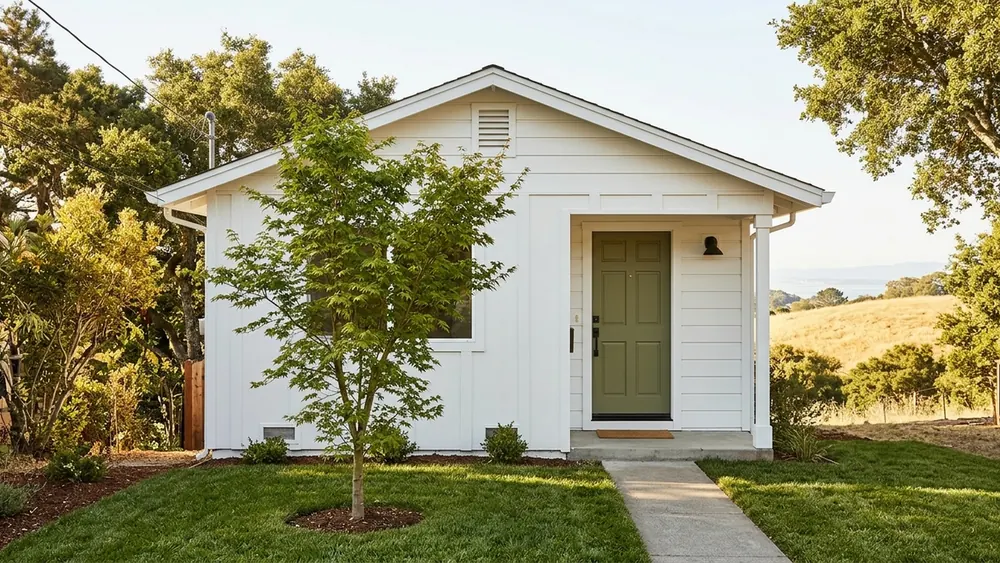
Many first-time buyers need less than 20% down. Depending on the program and your eligibility, the minimum can be 3% for some conventional loans, 3.5% for FHA, or nothing for eligible VA borrowers, with mortgage insurance, closing costs and reserves still to plan for.
On this page
The short answer
You may not need 20% down. Several loan programs allow a much smaller down payment, and some eligible borrowers need none at all. The right amount for you depends on the loan program, your credit, the property, the loan amount and how much cash you want to keep after closing.
A smaller down payment usually comes with trade-offs. It often means paying for mortgage insurance, borrowing more and having a larger monthly payment. So the useful question is not only “What is the minimum?” but “What amount leaves me with a payment and a cash cushion I’m comfortable with?”
Where the 20% idea comes from
Twenty percent is the point at which a conventional loan generally no longer requires private mortgage insurance, often called PMI. Putting down less than 20% on a conventional loan typically means paying for PMI, usually as part of the monthly payment. That cost is real, but it is not a ban on buying with less. For many first-time buyers, the choice is between waiting longer to save 20% and buying sooner with mortgage insurance.
Common loan options and their minimums
These are program minimums, not the amount every borrower will need. Lenders can set stricter requirements, and each program has its own rules on credit, income, property type and loan size.
| Loan type | Minimum down payment | Key conditions |
|---|---|---|
| FHA | 3.5% with a credit score of 580 or higher; 10% with a score from 500 to 579 | Mortgage insurance is required on every FHA loan, and FHA loan limits apply |
| Conventional, 97% financing | 3% | Fixed rate, one-unit primary residence. Fannie Mae’s standard option requires at least one first-time buyer; HomeReady has its own eligibility rules. Not available on high-balance loans |
| VA | None when the price is not above the appraised value | For eligible service members, veterans and some surviving spouses. A one-time funding fee may apply. A down payment may be needed if the loan exceeds your available entitlement |
| Conventional, 20% or more down | 20% | Generally no private mortgage insurance |
One California-specific point: in many higher-cost counties, a loan amount above the standard conforming limit falls into a “high-balance” category with different rules, including no 97% option. Your loan amount, not just the purchase price, can decide which programs are open to you.
Mortgage insurance and when it can end
Mortgage insurance is the main cost of a smaller down payment, so it helps to know how long you may pay it. The rules differ by program.
- Conventional PMI: you can ask your servicer in writing to cancel it once your balance reaches 80% of the home’s original value, if you meet the requirements, such as a good payment history. It generally ends automatically when the balance is scheduled to reach 78%.
- FHA: for loans with FHA case numbers assigned on or after June 3, 2013, the annual premium generally lasts 11 years if you put down at least 10%, and for the life of the loan if you put down less. Many borrowers who want to remove it later look at refinancing, which depends on qualifying at that time.
- VA: VA purchase loans do not carry monthly mortgage insurance, though the funding fee may apply.
Down payment assistance in California
The California Housing Finance Agency, CalHFA, offers first mortgage programs paired with down payment or closing cost assistance, often in the form of a deferred junior loan that is repaid when you sell, refinance or pay off the first loan. Some programs have income limits, first-time buyer or first-generation buyer requirements and homebuyer education. Some cities and counties run their own programs too.
These programs change, and funding can open and close. Check current availability before you plan around one, and read the repayment terms closely. Some assistance carries its own interest, and some is repaid with a share of the home’s appreciation.
Closing costs and California tax bills
Your down payment is not the only cash you need. Closing costs cover items such as lender charges, appraisal, title and escrow, plus prepaid property taxes and homeowners insurance. The California Department of Real Estate’s first-time buyer guide uses a rough planning range of 3% to 7% of the purchase price. Your lender must give you a Loan Estimate within three business days of your application, and that is where your own figures appear.
Two California items catch new buyers by surprise. After a purchase, the county reassesses the home and may send a supplemental property tax bill, and many lenders do not collect for it in escrow. Some neighborhoods also carry Mello-Roos or other special taxes that appear on the property tax bill. Ask about both before you finalize your budget.
Keep a cushion after closing
Putting every available dollar into the down payment can leave you with nothing for a repair, a move-in expense or a gap in income. Some loan programs also require reserves, meaning money left in your accounts after closing. Even when they don’t, a cushion protects you in your first year of ownership.
A practical approach is to work backward. Decide how much cash you want left after closing, subtract closing costs, and see what remains for the down payment. Then compare the payment and mortgage insurance at that amount against a slightly larger or smaller one.
Talking it through with Jack Terrell
If you are weighing how much to put down, Jack Terrell can walk you through the programs you may be eligible for and show how different down payment amounts change your cash to close and your monthly payment. As a mortgage broker, Jack can compare programs from more than one lender. There is no need to have it all figured out first. Bring your questions and a rough budget, and you can decide from there.
This article provides general information about real estate financing in California. It is not a loan offer, pre-approval, commitment to lend, or personalized legal, tax, or financial advice. Programs, availability, terms, and eligibility requirements vary by lender, property, and borrower and may change. Review the disclosures and loan documents applicable to your transaction and consult a qualified professional for tax, legal, or estate-planning guidance.
Jack Terrell, Mortgage Broker and Loan Originator | NMLS #103232 | CA DRE #00992181
California Mortgage Advisors, Inc. | NMLS #1825 | CA DRE #01170868
Licensed by the California Department of Real Estate.
Equal Housing Opportunity

Written by